Before you go in
Tea ceremony etiquette, first time
What a first-timer needs at a Kyoto tea ceremony: the sweet before the tea, turning the bowl, bowing, and why your guide's lead beats any rule.
Book the temple tea ceremony ↗Quick answer
You need very little. Japan-guide.com says regular tourists are not expected to know the rules in detail. If a sweet is served, eat it before the tea. Take the bowl in your right hand, set it on your left palm and turn it clockwise by about 90 degrees so its front does not face you. Drink in a few sips, then bow. At Jōtoku-ji the Tea Master guides every step.
Follow the host, not a rulebook
Procedures vary from school to school and with the season, venue and occasion, as Wikipedia notes, so no single list of rules is right everywhere. The tea ceremony at Jōtoku-ji is led by a Tea Master who shows and explains each step as you go. Reviewers describe the hosts as encouraging questions. If what you remember from an article differs from what the Tea Master says, follow the Tea Master. Use the points below as a calm background, not a test.
Dress and the garden
Japan-guide.com advises modest clothes, avoiding gaudy fashion and strong perfume, and removing jewellery that might damage the tea equipment. It adds that the traditional tea venue is surrounded by a garden kept tranquil and simple, with a stone basin near the entrance where visitors wash their hands before entering the tearoom. At Jōtoku-ji the booking page mentions a purification fountain in the temple grounds and a purification ritual at the start of the tour.
Read next: What to wear to a tea ceremony
Entering and sitting
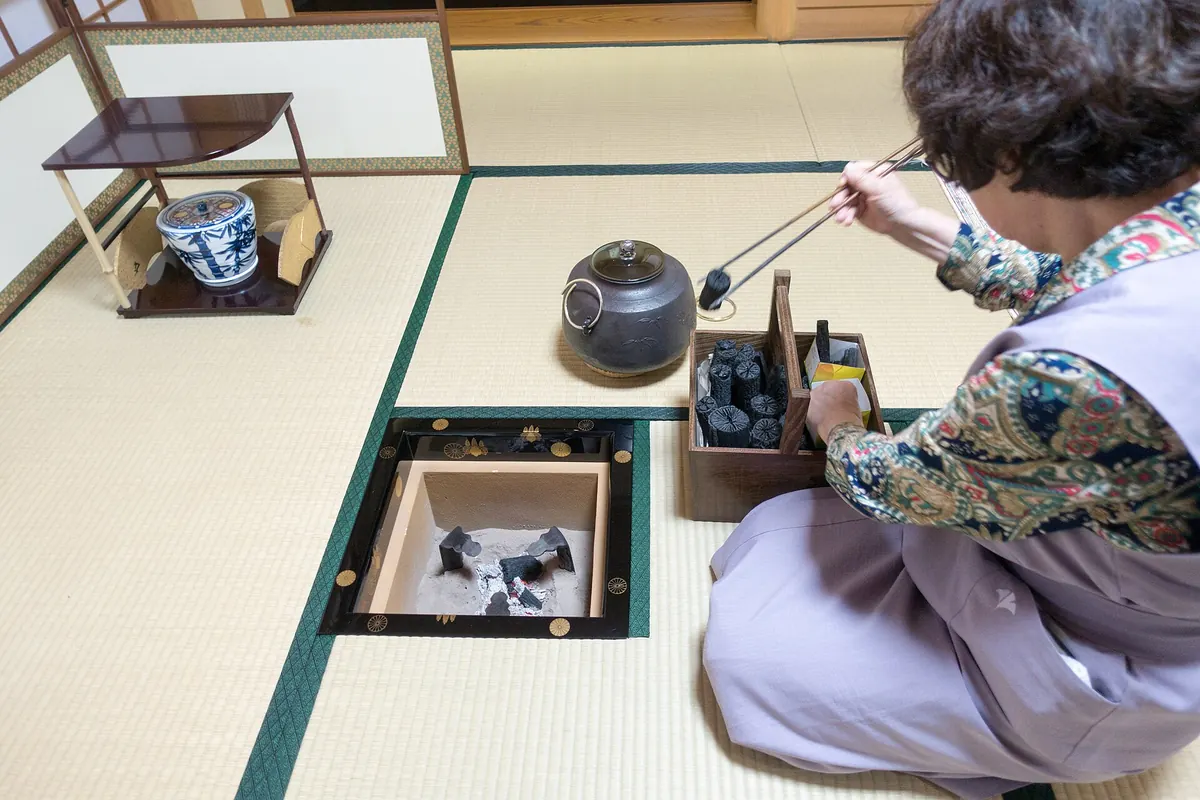
Shoes come off at the tearoom entrance. Japan-guide.com says guests ideally sit in seiza on the tatami floor, bow once the guests have taken their positions and then look at the decorations chosen for the occasion. At a formal gathering the first guest takes the seat closest to the alcove. If you cannot sit seiza, seats and stools can be provided at Jōtoku-ji for anyone not comfortable on the floor, and the seating guide explains what to ask for.
Read next: Tea ceremony: floor, seat or stool
The sweet comes first
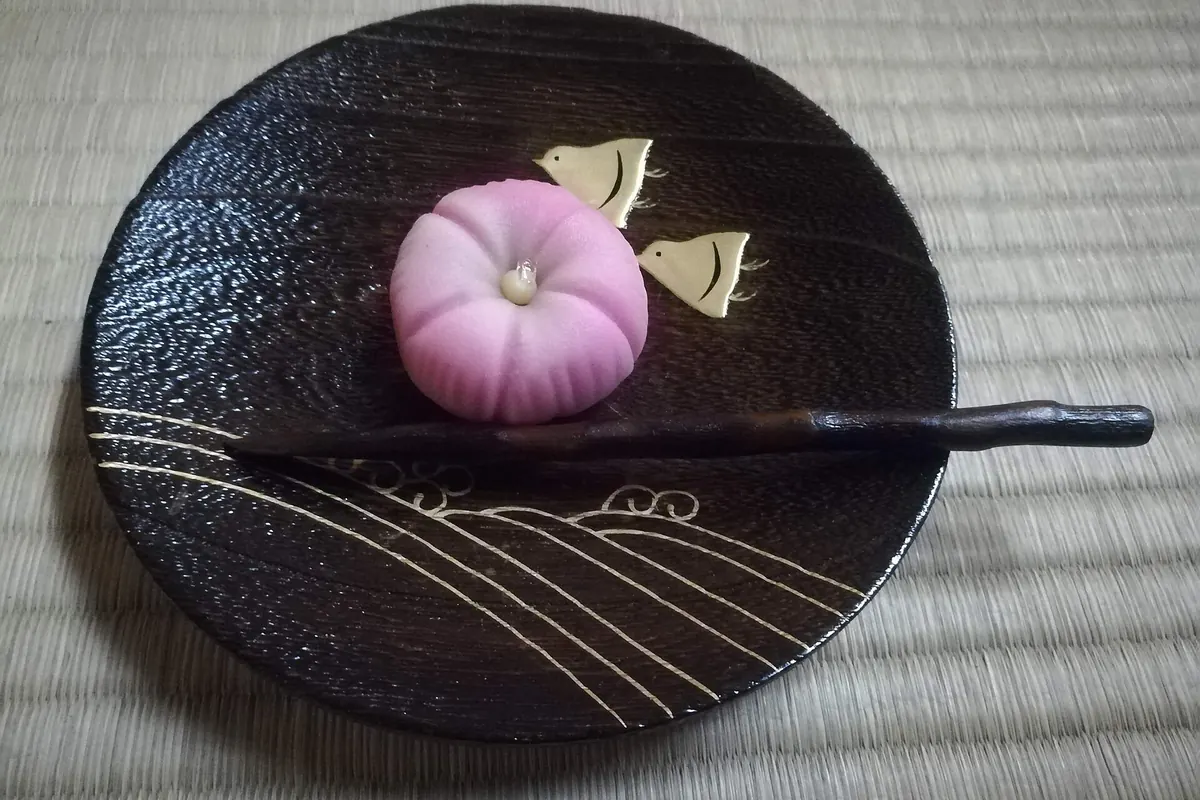
At many ceremonies a Japanese sweet is served before the tea, and Japan-guide.com says it is supposed to be eaten before the tea is drunk. Wikipedia explains that at a formal gathering the sweet, a wagashi, is eaten from a special paper called kaishi that each guest carries, and the same paper can be used to wipe equipment or clean hands, much like a napkin. If your ceremony serves a sweet, follow the Tea Master's lead on when to eat it.
Handling the bowl
Japan-guide.com gives the sequence: the bowl is placed on the tatami mat in front of you with its front facing you. Pick it up with your right hand, place it on your left palm, and with your right hand turn it clockwise by around 90 degrees so that its front is not facing you. Wikipedia says the guest turns the bowl slightly so as not to drink from the side facing the host. Drink in a few sips and place the bowl back on the tatami. Bow and express gratitude after receiving and finishing the tea.
Finishing, and admiring the bowl
Towards the end of the ceremony there is time to inspect and appreciate the bowl by lifting it, according to Japan-guide.com. Once finished, turn the bowl so that the front faces the host again. Wikipedia adds that the guest wipes the rim and may admire the bowl before returning it. Irregularities and imperfections in tea bowls are prized, and they are often featured prominently as the front of the bowl. The host may ask whether you would like another round; if not, the ceremony ends when the host washes the utensils.
Silence, questions and photographs
In a formal ceremony conversation is limited to a few exchanges between the first guest and the host, Wikipedia says, while in the thin tea portion guests may talk more casually. A group workshop is different in kind: the Tea Master explains as the ceremony proceeds and reviewers say questions are welcome. Before you take photographs in a temple or the tearoom, ask your guide.
Who this isn't for
Anyone hoping to master the full forms of a school such as Urasenke will not manage it in a single workshop: Wikipedia lists several iemoto schools, each with its own procedures, and training takes years. If you want the formal chaji with its kaiseki meal, which Wikipedia puts at up to four hours, this 70-minute ceremony is a shorter introduction. Anyone who finds ritual uncomfortable can still take part, because the purpose, as Japan-guide.com puts it, is enjoying the host's hospitality.
Read next: Tea ceremony in a Kyoto temple
Frequently asked questions
Do I need to know tea etiquette?
No. Japan-guide.com says regular tourists are not expected to know the rules in detail, and the Tea Master at Jōtoku-ji guides each step.
How do I hold the tea bowl?
Pick it up with your right hand, rest it on your left palm and turn it clockwise by about 90 degrees so the front faces away from you. Drink in a few sips, then bow.
Is a sweet served?
At many ceremonies, yes, and it is eaten before the tea. Follow the host's lead on when to begin.
Sources