Seating and access
Tea ceremony: floor, seat or stool
Can't sit on the floor? This Kyoto temple tea ceremony can provide seats and stools. How seiza works, who should ask, and the three steps to the tearoom.
Book the temple tea ceremony ↗Quick answer
Yes, you can join this tea ceremony without sitting on the floor. The booking page says seats and stools can be provided for anyone not comfortable sitting on the floor in the traditional position. The temple grounds are wheelchair accessible, but the tearoom is up three steps, so the ceremony is listed as not suitable for wheelchair users. Mention your need to the guide early, before the group goes in.
The short version
The ceremony at Jōtoku-ji is a traditional one: guests take off their shoes, enter the Grand Tearoom as a group and take their seats. The traditional position is on the floor. The booking page covers it in one line: for those not comfortable sitting on the floor in the traditional position, seats and stools can be provided. That matters to many visitors, and it means the floor is not a condition of booking. Tell the guide you would like a seat when the group meets.
What sitting on the floor means
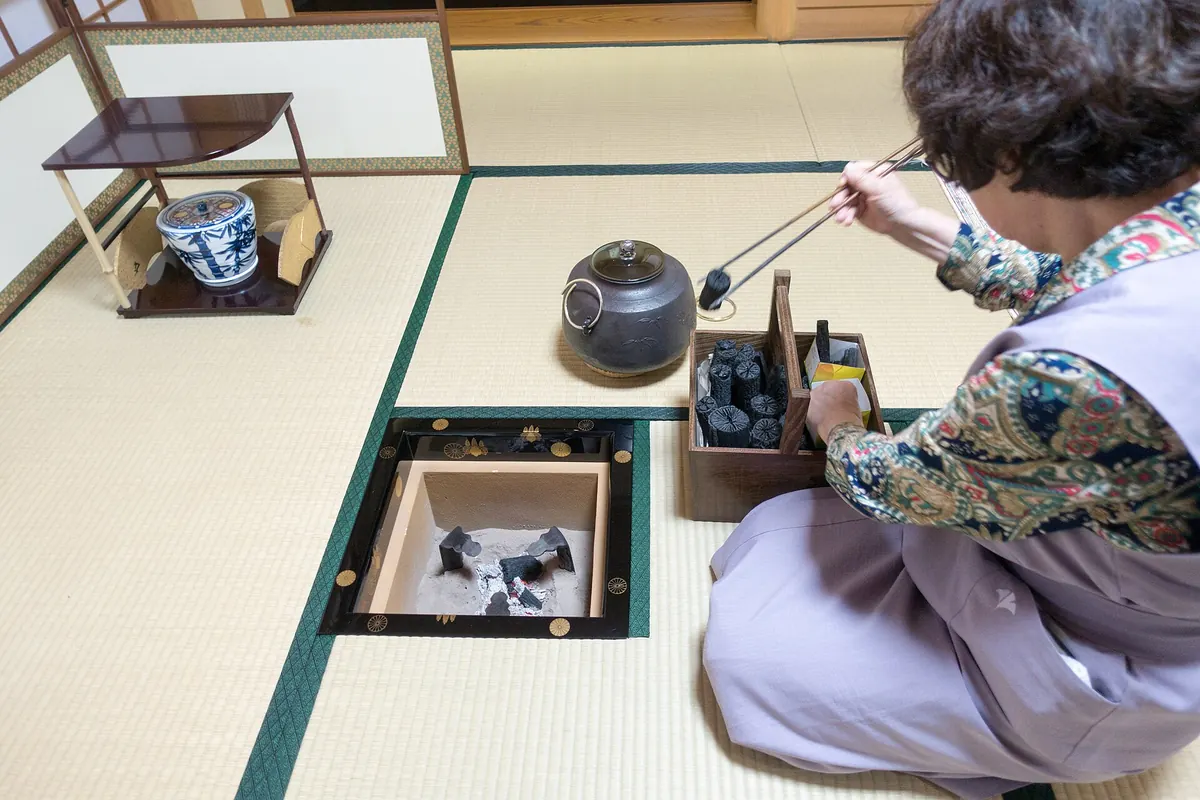
The formal posture is seiza, which Wikipedia translates as proper sitting. You kneel, fold your legs under your thighs and rest your weight on your heels, with a straight back. The article says it developed among samurai in the Edo period and was later adopted by the public, and that it is closely associated with tatami flooring. It is part of the tea ceremony tradition, which is why the floor is the default in a tearoom. Wikipedia adds that tatami provide a more comfortable surface for sitting seiza-style, and that when moving about on the mats a guest keeps closed fists on them and pulls forward while staying in the position. The posture is part of the tradition; the workshop's job is to introduce you to it.
How hard seiza is for visitors
Wikipedia is candid. People not accustomed to seiza often find it difficult, and those unfamiliar with it will likely find that holding it for more than a minute or two leads to pins and needles, then burning sensations and eventually numbness in the legs. Experienced practitioners can hold it for forty minutes or more with little discomfort, and the discomfort lessens with practice. A 70-minute ceremony is a long time for a first-timer to hold the position, which is why a stool is a reasonable request. The same article says stools are sometimes provided for elderly or injured people even when others sit seiza.
Who should ask for a seat
Anyone who is unsure should ask for a seat. Wikipedia says sitting seiza for long periods is associated with health problems, particularly in the knees, and that certain knee problems are made worse by the position. Visitors with stiff hips or backs, anyone recovering from an injury and older guests are the obvious candidates. This is general information, not medical advice, so take guidance from your own doctor. If you are on the fence, ask for the seat, so that discomfort does not take over the hour.
Read next: Tea ceremony etiquette, first time
Chairs have a place in tea
Table-and-chair tea is an established format with its own name, ryūrei. Wikipedia says the host sits on a chair at a special table and the guests also sit on chairs, and that it originated in the Urasenke school, initially for serving non-Japanese guests who, it was thought, would be more comfortable on chairs. The Seiza article adds that the table-style version was invented in the 19th century. At Jōtoku-ji the offer is a seat or stool for the guest who needs one. If you want every guest at a table, the table-style ceremony in a Kyoto machiya on this page's booking cards is built around chairs.
The three steps to the tearoom
The booking page is specific on access: the temple is wheelchair accessible but the tearoom is not, because there are three steps up to it. The organiser rules the ceremony out for wheelchair users. The same three steps matter to anyone with limited mobility who is not in a wheelchair, such as a guest with a cane or a knee brace. A stool solves the floor, not the steps. If the steps are a concern, weigh that before booking, and consider the table-style machiya ceremony on the booking cards, which is built around chairs.
Waiting, benches and weather
Your guide meets you at the red benches inside the temple grounds, and the booking page says that, weather permitting, you are free to sit on them for a break. In rain you can stand under the gable of the parish shop or wait inside the Grand Tearoom. That helps guests who tire easily: you can arrive, sit and take your time before the group enters. The grounds also have a purification fountain and architecture to look at, so a slow start costs you nothing. Be at the meeting point before the start time in your confirmation, so that you can settle on a bench and mention the seat in good time.
Shoes, socks and clothes that work
Shoes come off at the door of the Grand Tearoom, so wear socks. Japan-guide.com advises modest clothes, removing jewellery that may damage the tea equipment and avoiding strong perfume. For seating, choose clothes that let you bend your knees or sit low without strain. If you rent a kimono, ask the rental shop how to sit in it, since Wikipedia notes that the kimono restricts movement. The Tea Master guides each step, so there is no need to memorise a procedure beforehand.
What to say, and when
Keep it simple. Tell your guide at the benches that you would prefer a seat or stool, before everyone takes off their shoes. Mention any injury, and say if you are not sure you can manage the three steps. Reviewers describe the hosts as welcoming of questions, so a quick word before you go in is easy to make. If your knees or the steps rule this ceremony out, a GetYourGuide booking stays cancellable until 24 hours before the start, so you can swap to a chair-based ceremony.
Ceremonies built around chairs
One other Kyoto tea ceremony on this page is built around chairs from the start. A table-style ceremony in a machiya, a traditional Kyoto townhouse in Fushimi, south of the centre, uses tables and chairs, so nobody sits on the floor, and the organiser pairs it with matcha and sweets. It is not held in a temple. The third booking card, a 45-minute lesson, has guests take their place on the tatami, so it is no help if the floor is the problem. Choose the machiya if comfort matters more than the setting, and choose Jōtoku-ji if the temple is the point and a stool will do.
Who this isn't for
Wheelchair users are not served by this ceremony, and the three steps may be too much for guests who cannot manage stairs. Children under 5 are not suitable, and the ceremony is best suited to guests aged 5 and over. If you want everyone at a table with no steps at all, choose the chair-based ceremony on the booking cards instead. And if you want a deep lesson in the floor-sitting tradition, expect an explanation of the main points: the ceremony is 70 minutes in all, and the Tea Master has a whole ritual to cover.
Frequently asked questions
Can I do this tea ceremony without sitting on the floor?
Yes. The booking page says seats and stools can be provided for anyone not comfortable sitting on the floor in the traditional position. Tell your guide early.
Is there a ceremony with chairs and tables?
Yes, in Kyoto there are table-style ceremonies, called ryūrei. The booking cards on this page include one in a machiya that uses tables and chairs. The temple ceremony offers seats or stools.
Are there steps?
Yes. The temple is wheelchair accessible, but the tearoom has three steps, so the organiser rules the ceremony out for wheelchair users.
Why is floor sitting traditional?
Seiza is the formal, respectful posture on tatami floors, and it developed among samurai in the Edo period, according to Wikipedia. It is built into the tea ceremony tradition.
How long will I be seated?
The ceremony lasts 70 minutes in all. A stool or seat is for anyone who would find that long on the floor.
Sources